
If you're following a low FODMAP diet, pizza night can feel a little complicated.
Traditional pizza dough contains wheat. Many sauces and toppings include garlic or onion. The good news is that you can still enjoy a classic low FODMAP cheese pizza at home with a few simple adjustments.
My recipe features a gluten-free pizza crust made with Bob's Red Mill Gluten-Free 1-to-1 Baking Flour and a low-lactose serving of mozzarella cheese to help keep the recipe within low FODMAP serving sizes. It also incorporates my easy homemade pizza sauce, but you can also use jarred low FODMAP pasta sauce for added convenience.
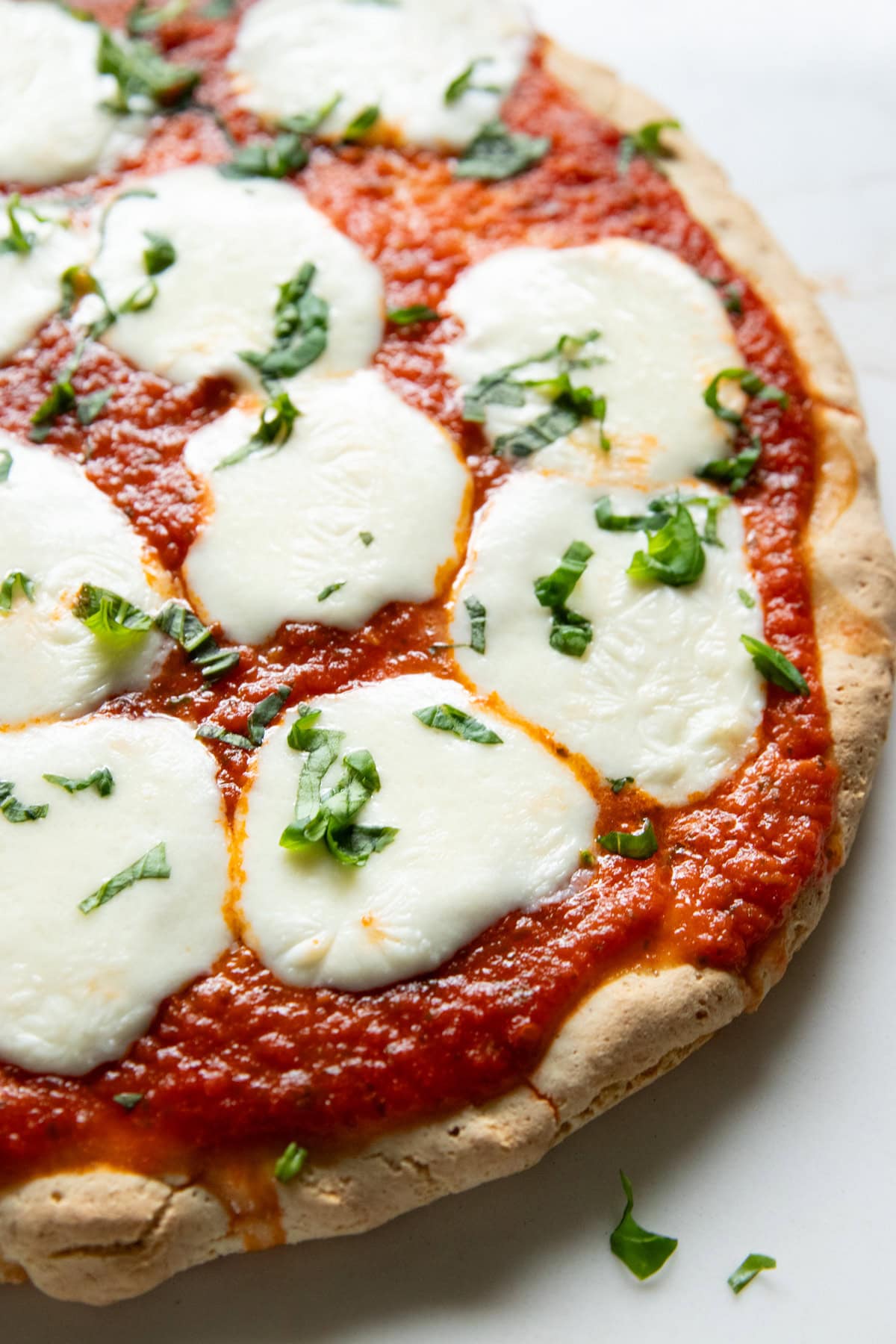
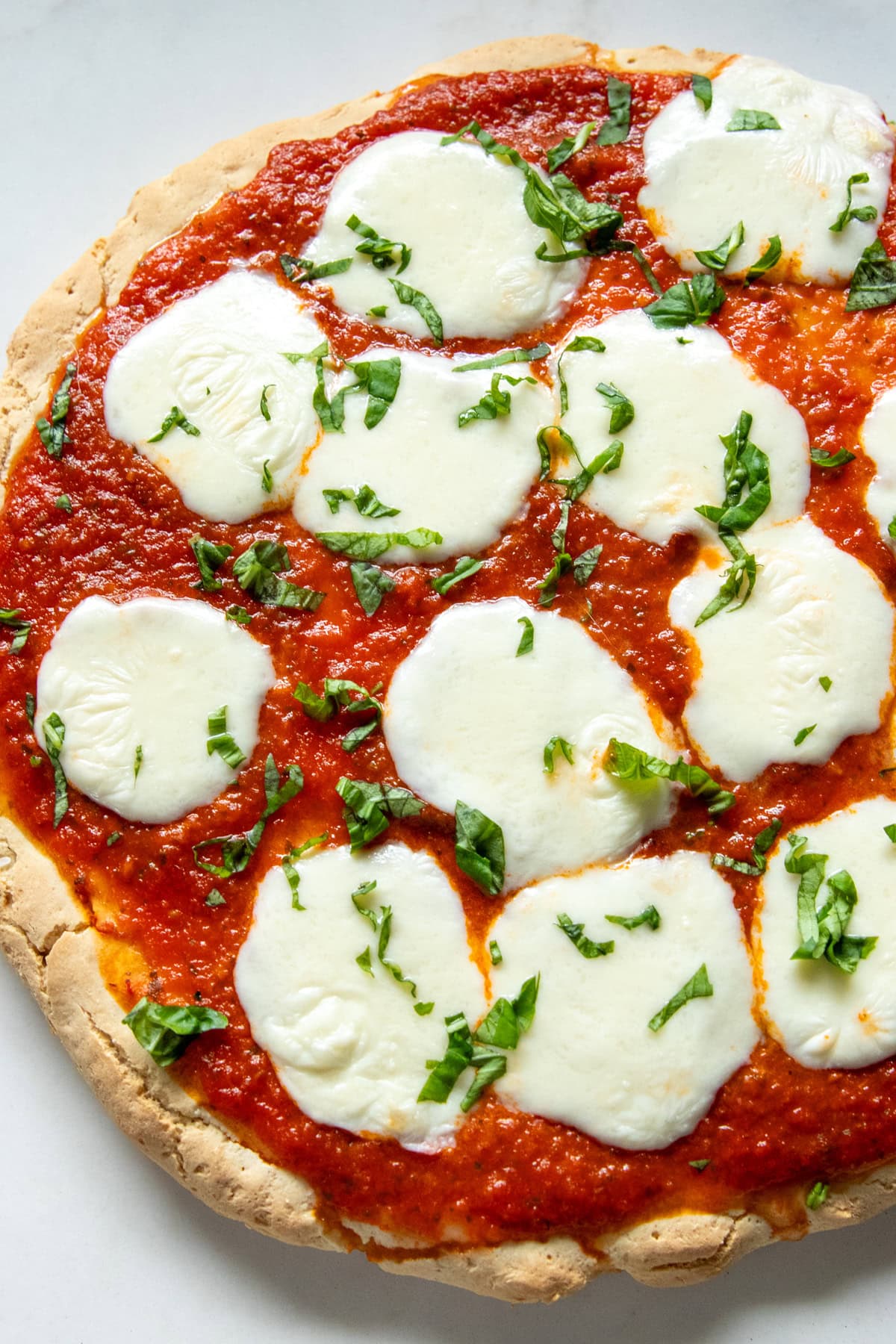
The result is a simple, satisfying pizza with a golden crust and melty cheese that works well for weeknight dinners or casual pizza nights. And it's basic enough that you can add your favorite pizza toppings to make it your own.
Jump to:
Ingredients
To make this Low FODMAP cheese pizza, gather these ingredients:
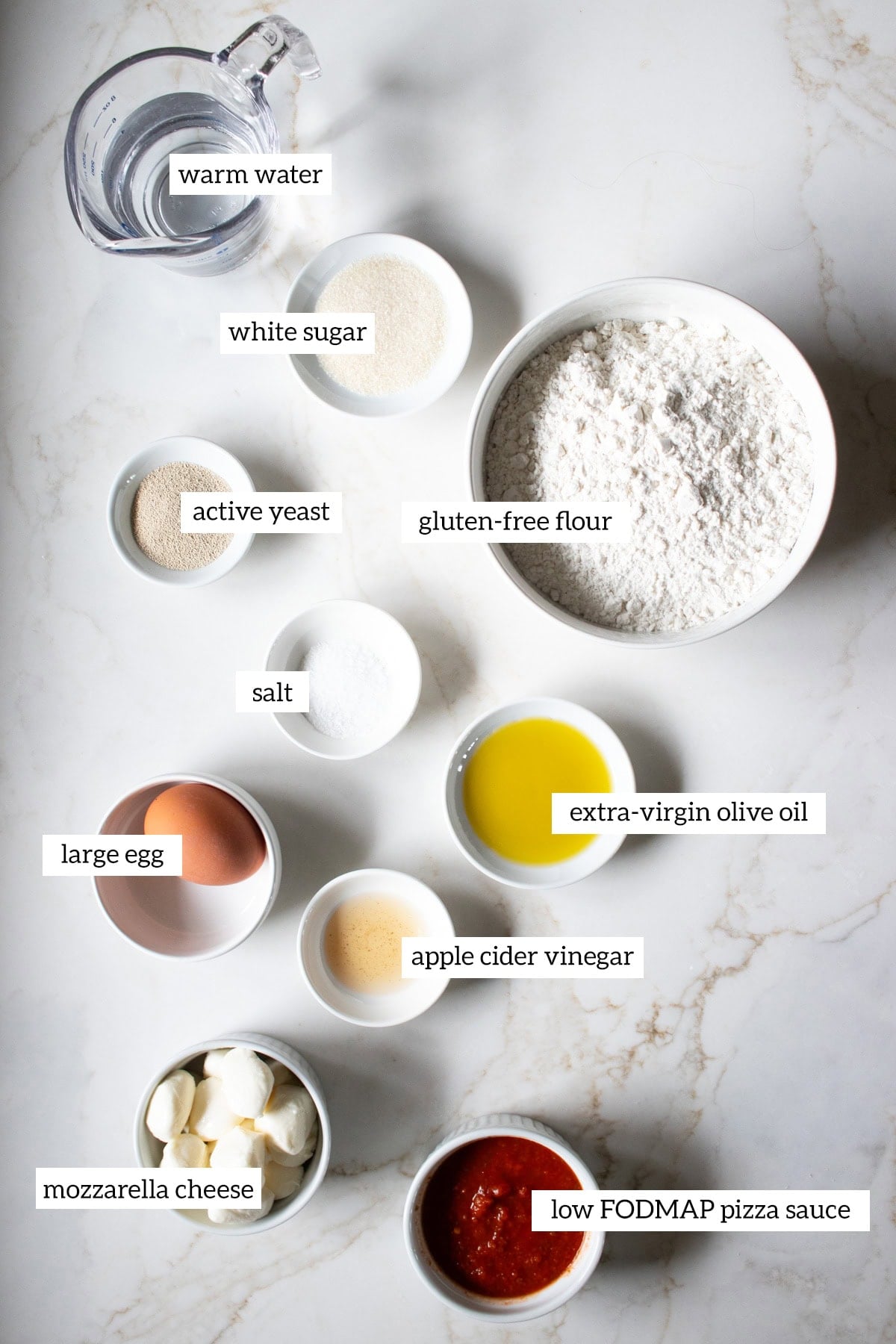
For the low FODMAP pizza dough:
- Warm water (100-110°F) - ¾ cup
- Granulated sugar -1 tablespoon (15 g)
- Active yeast, such as Fleishmann's -1 (7 g) packet (or 2 and ¼ teaspoons)
- Bob's Red Mill Gluten-Free 1-to-1 Baking Flour - 2 cups (290 g)
- Kosher salt - 1 teaspoon (6 g)
- Egg - 1 large
- Extra-virgin olive oil - 1 tablespoon (12 g)
- Apple cider vinegar - 1 teaspoon (5 g)
For the cheese pizza toppings:
- Homemade low FODMAP pizza sauce or jarred low FODMAP pasta sauce, such as Fody Foods Low FODMAP Tomato and Basil Sauce - ½ cup (125 g)
- Mozzarella cheese, such as BelGioioso "cherry-sized" balls (or dairy-free mozzarella-style shreds for dairy-free) - 1 cup (160 g)
- Fresh basil - 2 tablespoons, thinly sliced
Low FODMAP Notes
In this section, I share information for ingredients that are either frequently asked about or have suggested serving sizes to remain low FODMAP. We each have unique tolerance levels and nutritional needs. Please listen to your body (and, if possible, work with a FODMAP-trained dietitian) to determine what is best for you. For more low FODMAP serving size info, please refer to the Monash FODMAP app and FODMAP Friendly website or app.
Granulated sugar (or white sugar) is low FODMAP in servings up to ¼ cup or 50 grams.
Bob's Red Mill Gluten-Free 1:1 Baking Flour (in the blue bag) is my go-to low-FODMAP flour. Wheat flour is high in FODMAPs, whereas gluten-free flours made with rice, potato, and tapioca starch are low FODMAP in amounts up to ⅔ cups or 100 grams.
Although this Bob's Red Mill flour hasn't specifically been tested, it appears to be low FODMAP by ingredients. It is also readily available across the US. You can usually find this flour in the "health," "natural," or gluten-free foods section of the grocery store and online.
Unless you tolerate GOS, avoid the Bob's Red Mill Gluten-Free All-Purpose Baking Flour in the red bag while low FODMAPing. This flour is made from higher FODMAP garbanzo beans.
Apple cider vinegar: A low FODMAP serving is 2 tablespoons or 42 grams.
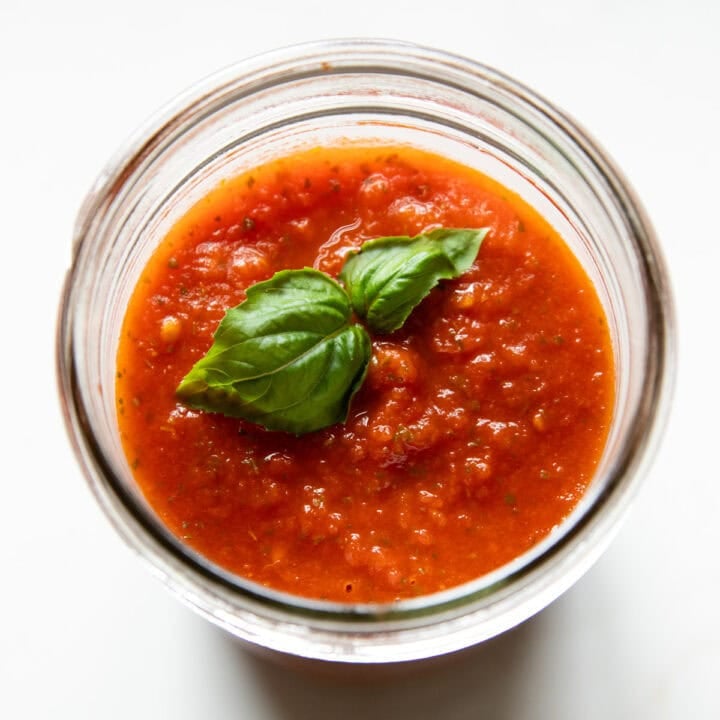
Pizza sauce: I use my quick and easy Low-FODMAP pizza sauce recipe, but you could also use a jarred low-FODMAP pasta sauce, such as Fody Foods Low FODMAP Tomato and Basil Sauce or Fody Foods Low FODMAP Marinara Sauce.
Mozzarella is a low-lactose cheese. The recommended low FODMAP serving size is ¼ cup or 40 grams.
Vegan cheese and soy cheese have been tested by the FODMAP Friendly Food Program and Monash University, respectively. Vegan cheese is considered low FODMAP in servings up to 30 grams or 1 ounce. A low FODMAP serving of soy cheese is 2 slices or 40 grams.
To date, no specific vegan/dairy-free cheese brands have been tested. If these products are part of your lifestyle, I would encourage double-checking labels for high FODMAP ingredients and sticking to the low FODMAP serving sizes for vegan or soy cheese. If concerned, please avoid and test-to-tolerance when symptoms are under control.
Basil is low FODMAP in servings of 1 tablespoon (5 grams).
Instructions
Making homemade pizza might sound intimidating, but this recipe keeps things simple. The process involves activating the yeast, mixing a quick gluten-free dough, and briefly baking the crust before adding the toppings.
Activate the Yeast
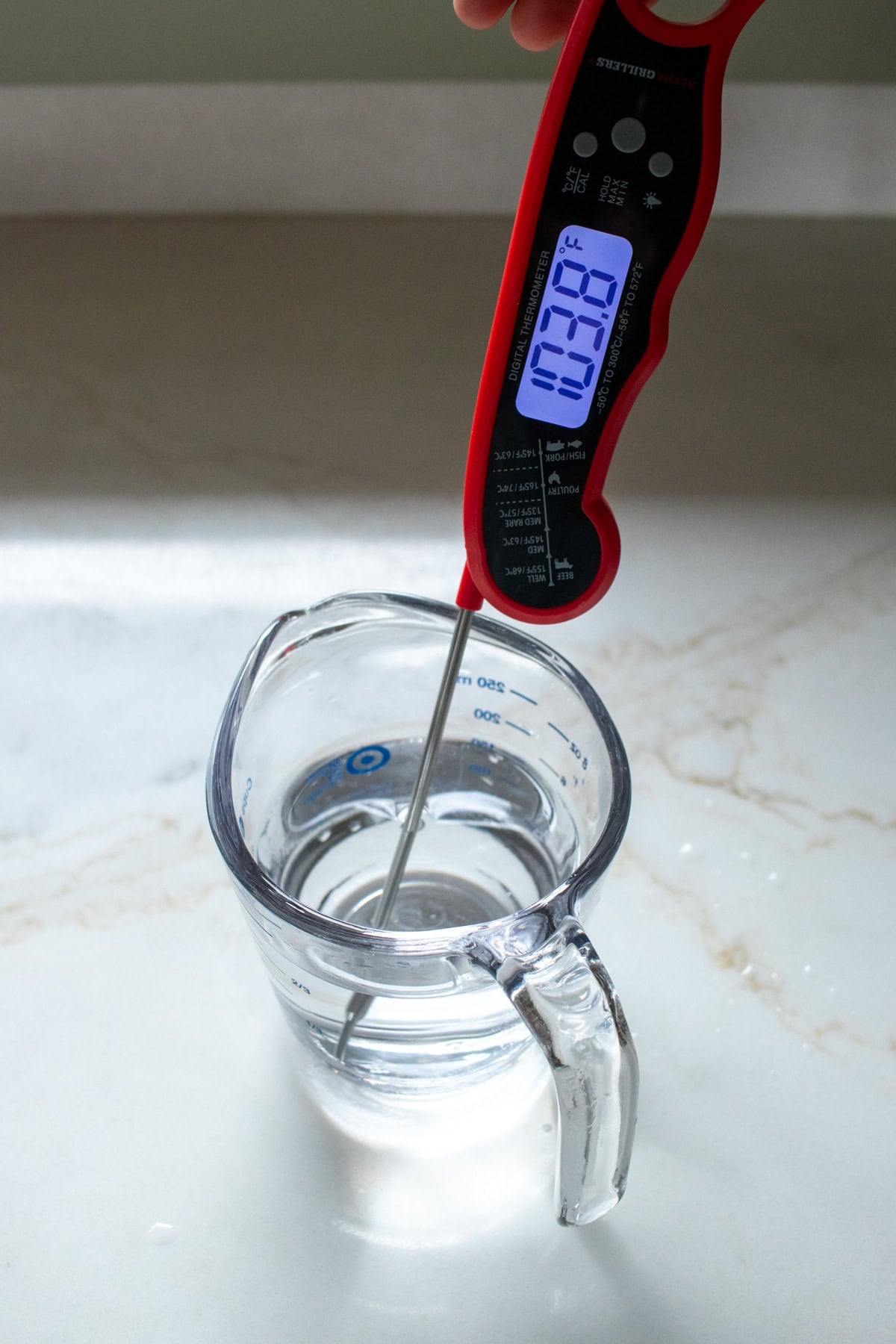
Start by measuring warm water (100-110°F) in a liquid measuring cup. If your water isn't the right temperature, either briefly microwave if it's too cold or let it cool down if it's too hot. Stir in the sugar and sprinkle the yeast over the top. Let the mixture sit for about 5 minutes, or until it becomes foamy.
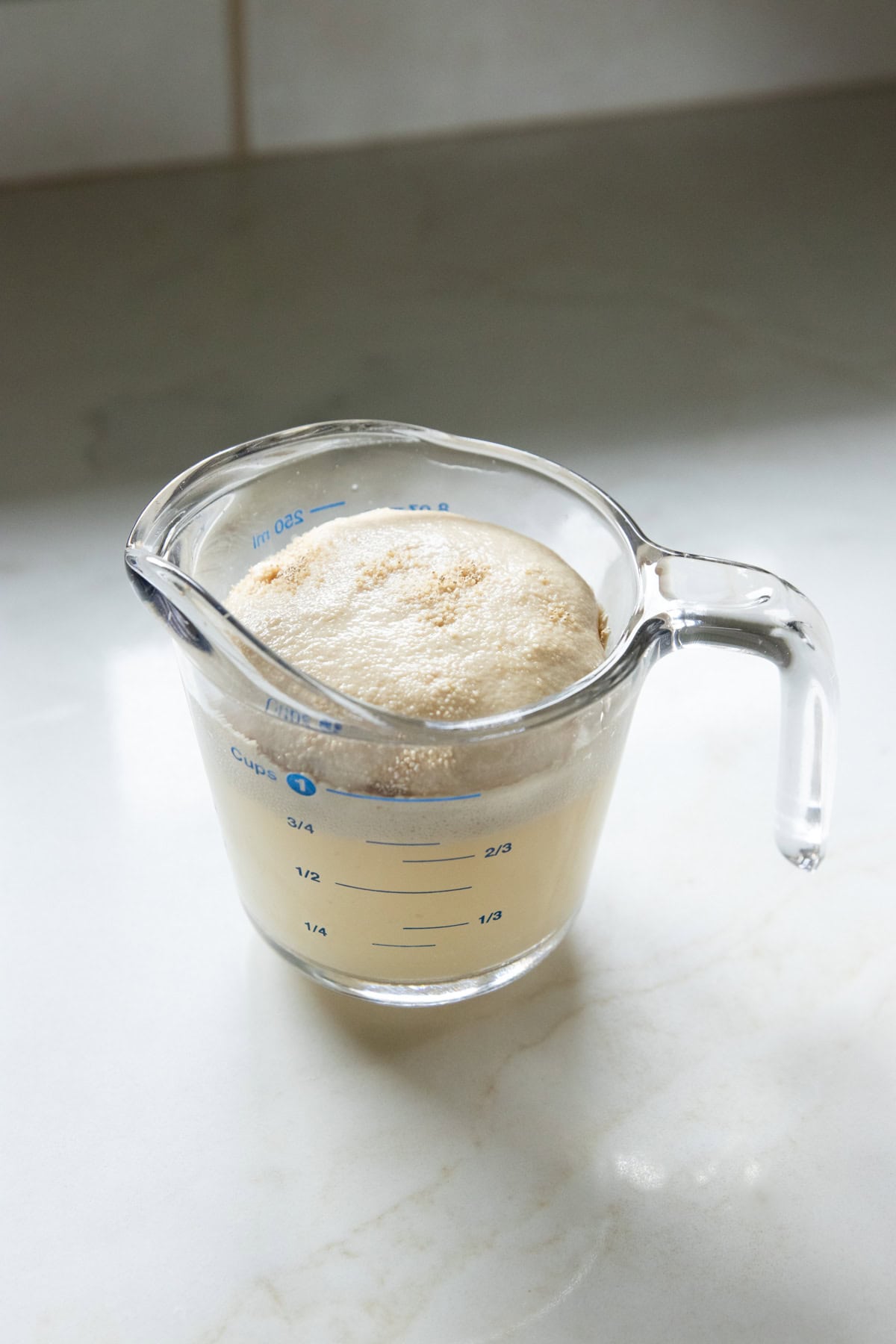
If your mixture doesn't foam, the yeast may be inactive, and your dough may not rise properly.
Mix the Dough
While the yeast is developing, combine the gluten-free flour and salt in the bowl of a stand mixer.
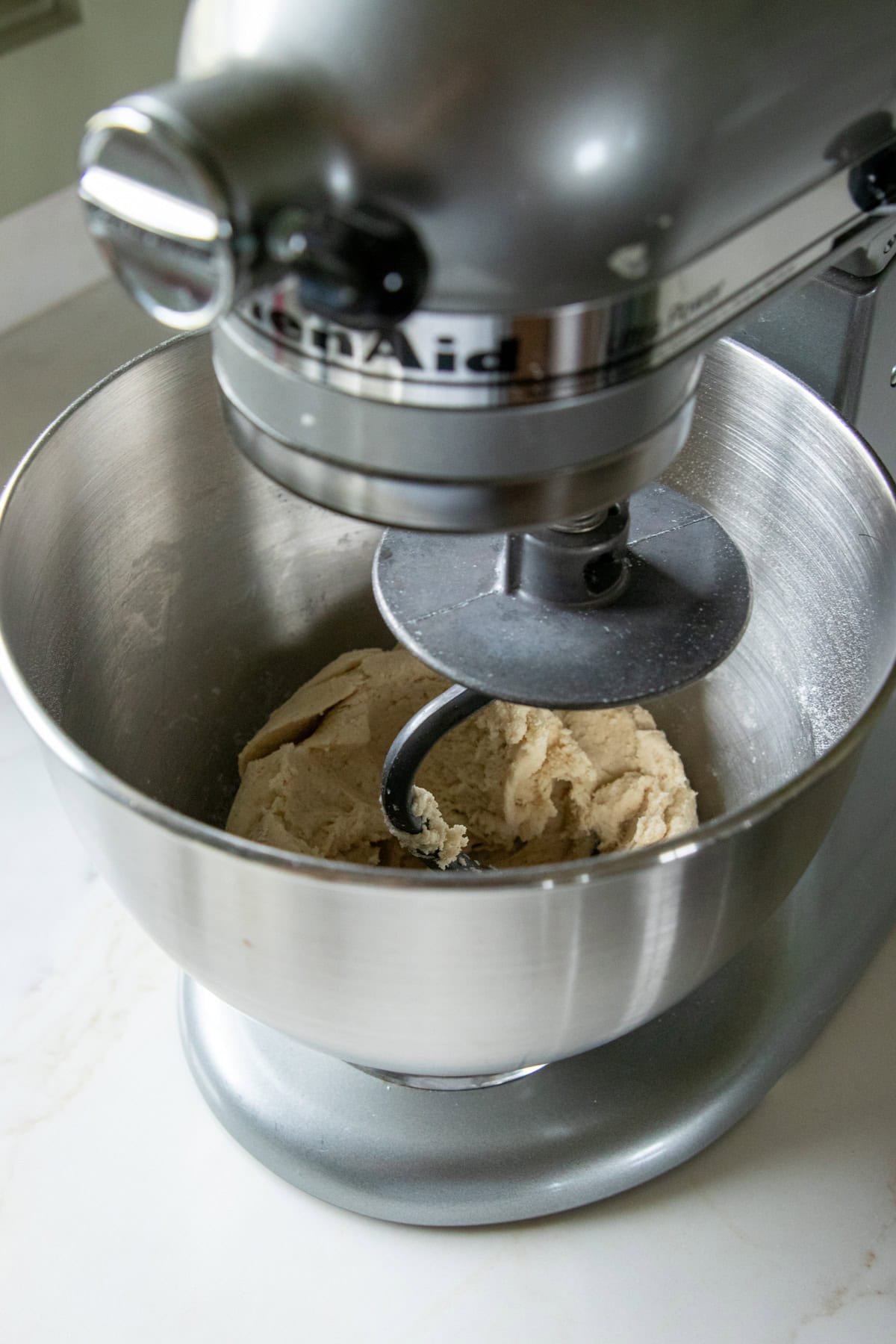
Add the egg, olive oil, apple cider vinegar, and yeast mixture. Mix with a dough hook on medium-low speed for about 1 minute. Pause the mixer and fold in any loose flour if needed. Continue mixing on medium-low for another minute, or until a dough ball forms.
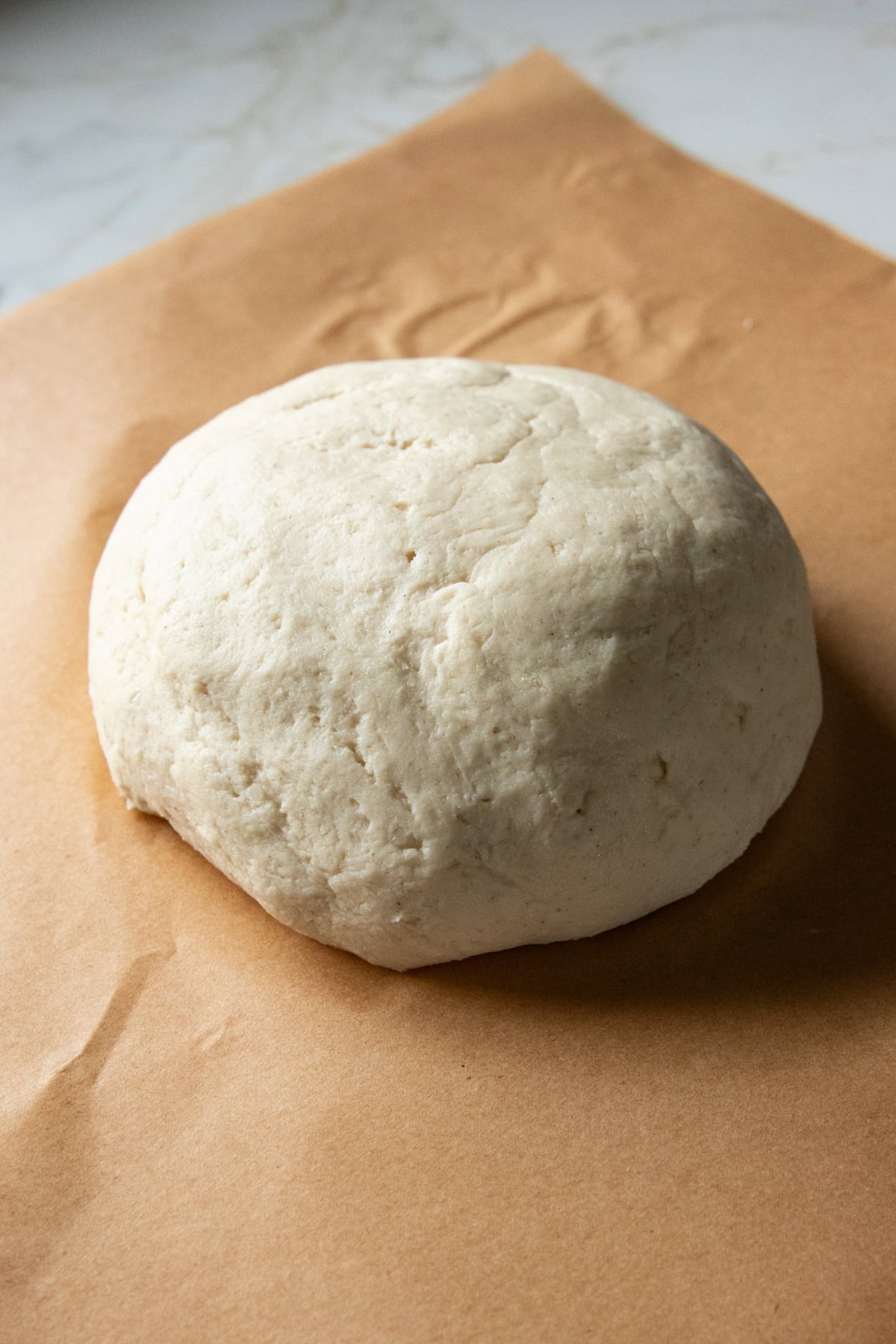
FYI: Gluten-free dough tends to be softer and slightly stickier than traditional wheat dough, which is normal.
Shape Your Pizza Crust
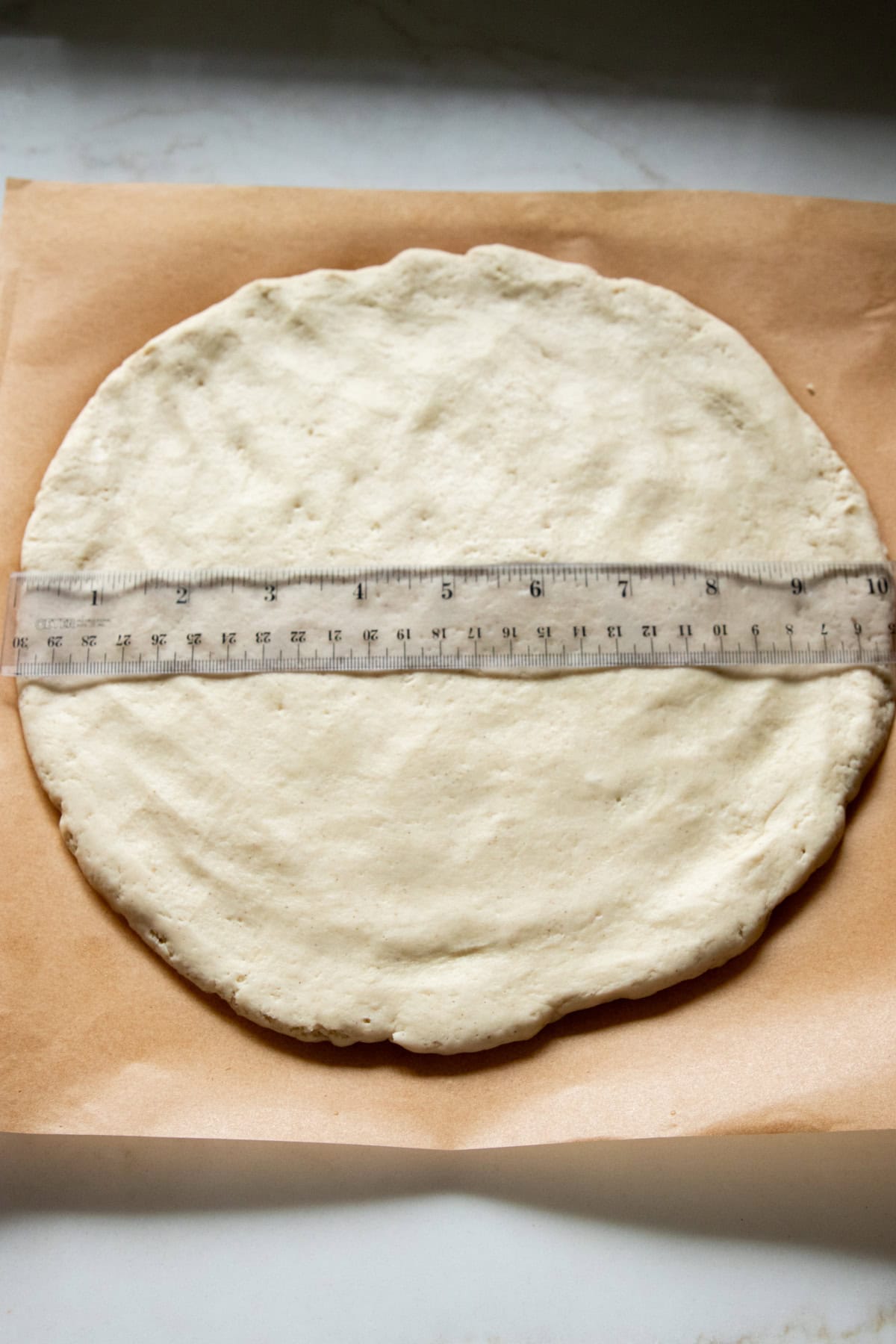
Transfer the dough to a piece of parchment paper. I like to cut my parchment paper into a 12-inch square. Lightly oil your hands (a small amount of olive oil works well) and press the dough into an even circle about 10 inches wide.
Using parchment paper makes the dough easier to handle and allows you to transfer it to the hot pizza pan without sticking.
Par-Bake the Crust
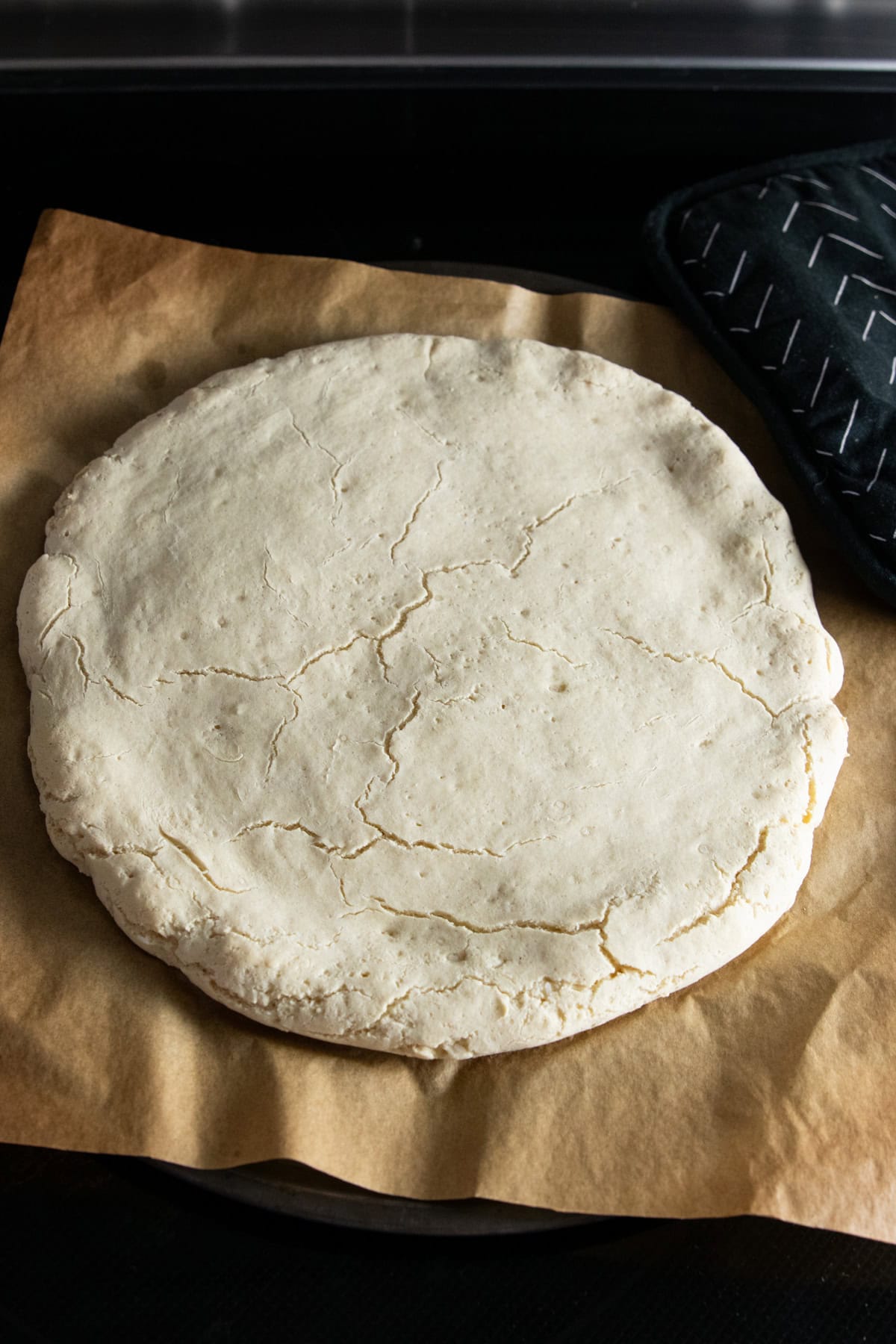
Carefully transfer the parchment and dough onto the preheated pizza pan or pizza stone. And yes, it is fine to use parchment paper at 450°F, per America's Test Kitchen (it may just turn a little brown and become more brittle).
Bake the crust for 8-10 minutes. This initial bake helps set the crust so it doesn't become soggy when the sauce and cheese are added.
Add the Toppings
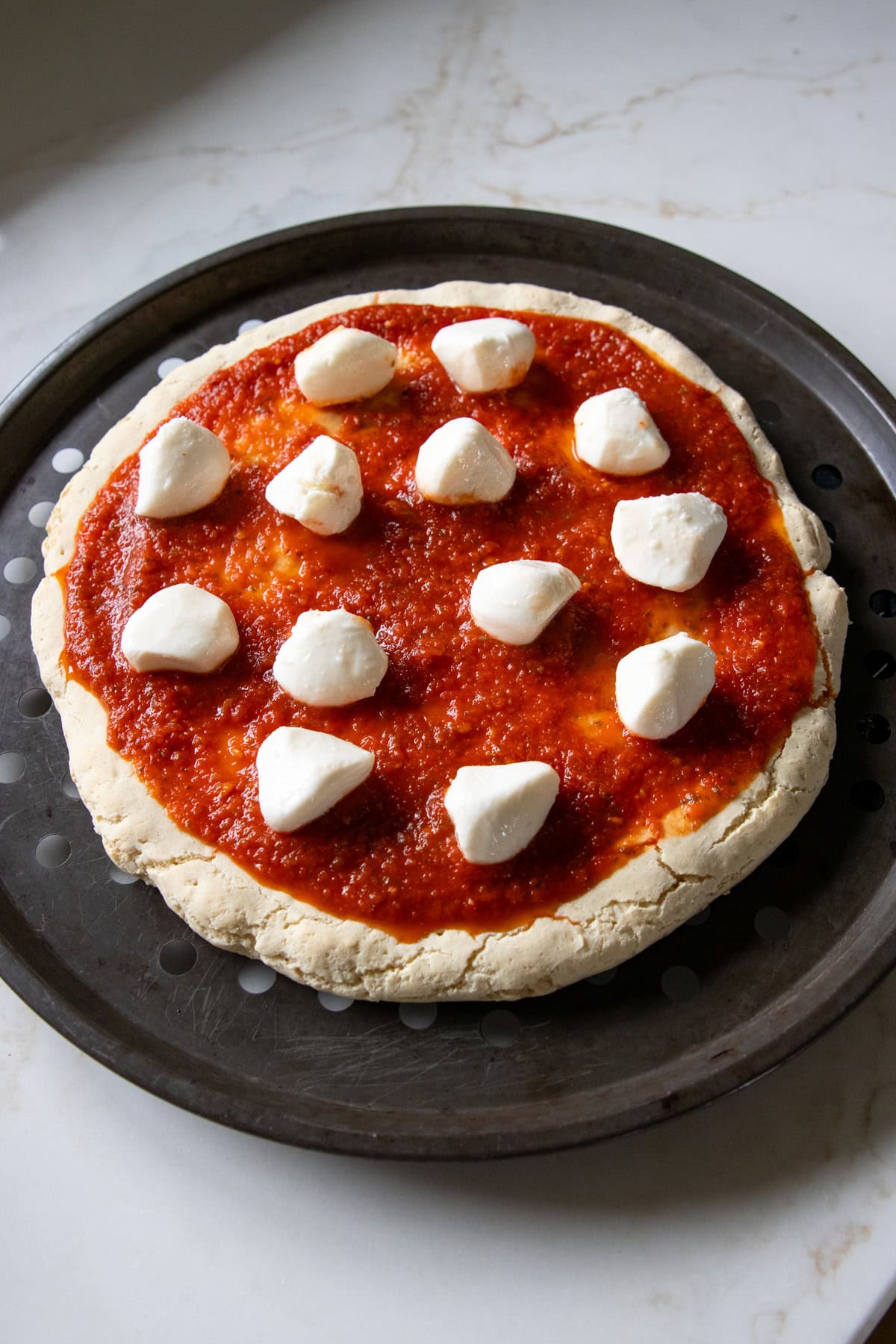
Remove the crust from the oven and slide the parchment paper out from underneath.
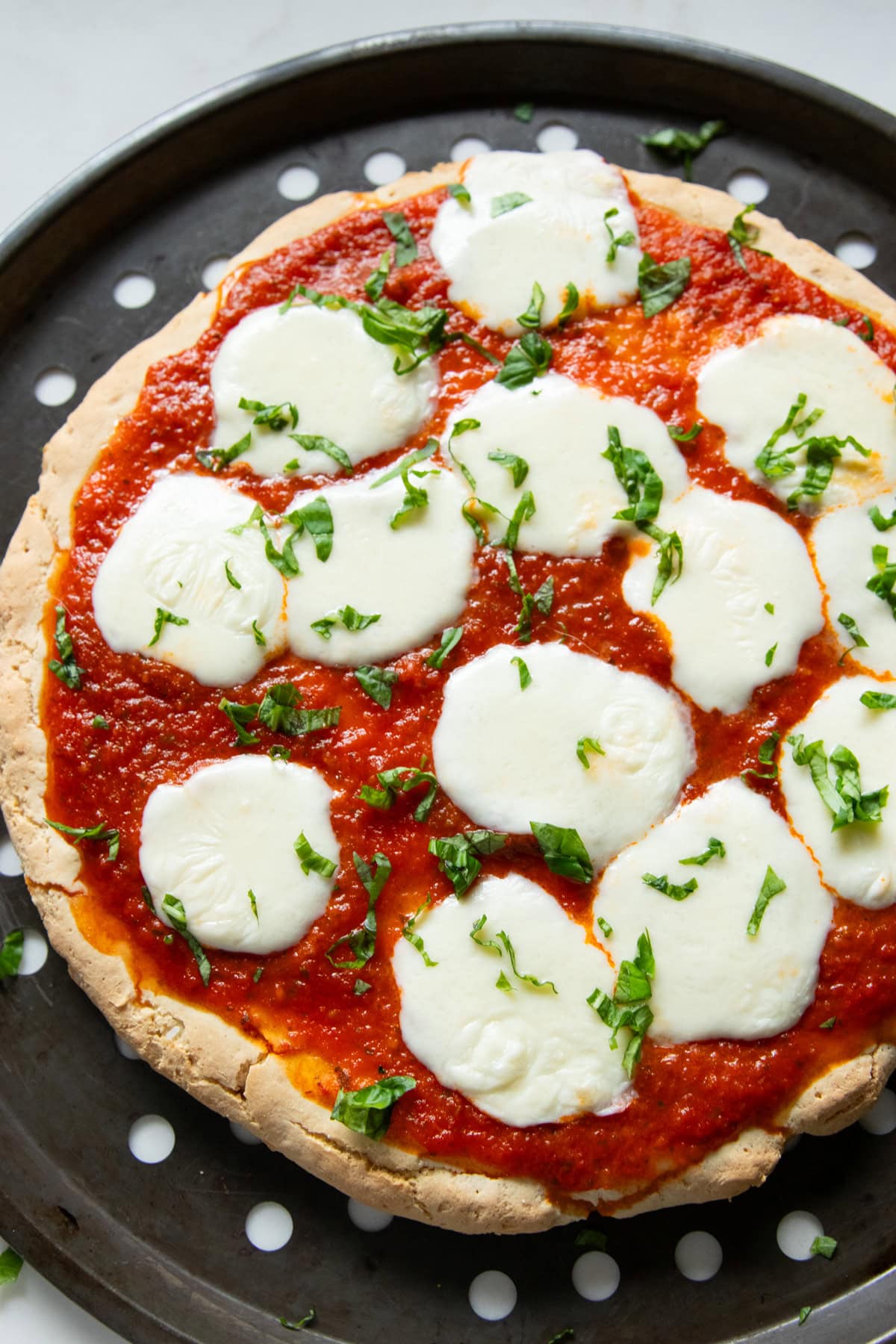
Spread the pizza sauce evenly over the crust, then top with mozzarella cheese.
Bake the Pizza
Return the pizza to the oven and bake for another 8-10 minutes, or until the cheese is melted and the crust turns lightly golden brown.
Slice and Serve
Let the pizza cool slightly before slicing. Top with fresh basil if desired and serve warm.
Serving Size
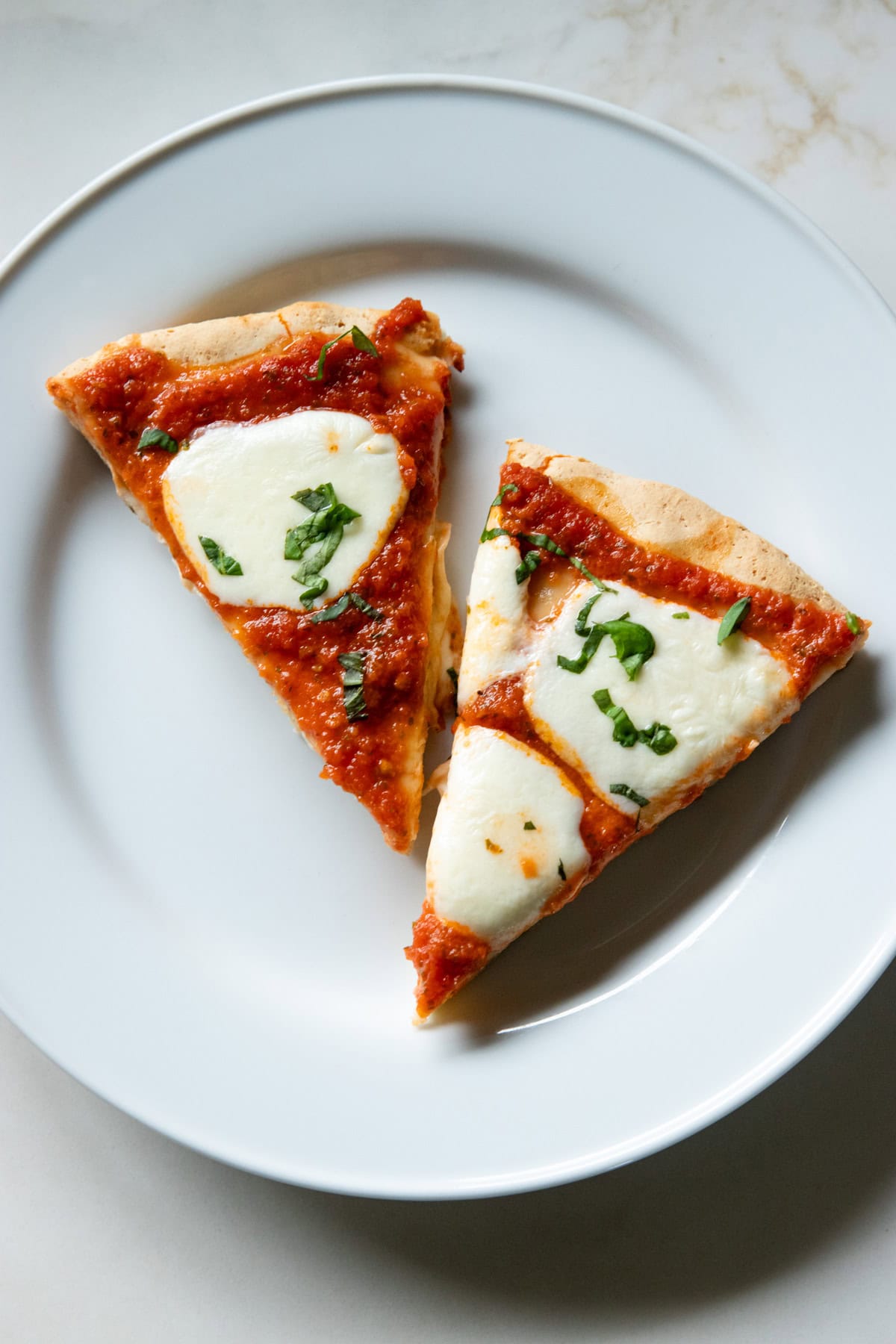
This recipe makes one 10-inch pizza. Divide it into 4 servings to stay within low FODMAP limits. I like to cut the pizza into 8 pieces, so a serving size would be 2 slices.
Storage
This pizza is best enjoyed right after baking. However, leftovers can be refrigerated for up to 3 days. I have not tried freezing this recipe.
To reheat, I like to place leftover slices in my air fryer on the reheat setting for about 8 minutes at 350°F.
Variations
Once you have this basic low-FODMAP cheese pizza down, you can easily customize it to your preferences and tolerances.
Some other low FODMAP topping ideas include:
- Sliced olives
- Small diced pineapple
- Low FODMAP sausage
- Leftover cooked chicken
- Bell peppers
- Green onion tops
Equipment
I keep my kitchen equipment inventory pretty simple and stick to multi-purpose, long-lasting tools whenever I can. Here are kitchen essentials that I used to make this recipe:
Stand mixer: An investment, but worth it if you bake a lot. I've had mine since 2015, and it still works like it's brand new.
Dietitian Notes
In addition to being made with low-FODMAP ingredients, this recipe can also meet several other common dietary needs. Keep in mind that ingredients can vary, so it's always a good idea to check labels to make sure the products you choose meet your individual dietary needs.
- Gluten-free / wheat-free: This recipe is naturally gluten-free and wheat-free. Be sure to double-check ingredient labels to avoid possible cross-contact during processing.
- Dairy-free: To make this dairy free, choose a coconut-oil based vegan cheese substitute made without high FODMAP ingredients.
- Vegetarian: This recipe is vegetarian if you consume eggs and dairy.
If you are managing other dietary restrictions alongside the low FODMAP diet, working with a registered dietitian can help ensure your diet remains balanced and nutritionally adequate. A more flexible or "FODMAP gentle" approach may also be worth considering.
Serve this with
To round out this meal, consider serving this pizza with a low FODMAP serving of a fruit and/or vegetable.
Some simple ideas include:
- A simple lettuce and cucumber salad with olive oil and lemon juice
- Steamed green beans
- A side of blueberries, an orange, or a kiwi
Recipe
Low FODMAP Cheese Pizza
- Total Time: 30 minutes
- Yield: 1 pizza (4 servings) 1x
- Diet: Low FODMAP
Description
This low FODMAP cheese pizza features a simple homemade gluten-free crust topped with pizza sauce and melted mozzarella. It's designed to fit within Monash low FODMAP serving sizes, making it a great option for pizza night if you're managing IBS.
Ingredients
Low FODMAP Pizza Dough
- ¾ cup warm water (100-110°F)
- 1 tablespoon (15 g) granulated sugar
- 1 (7 g) packet active yeast (or 2 and ¼ teaspoons), such as Fleishmann's
- 2 cups (290 g) Bob's Red Mill Gluten-Free 1:1 Baking Flour (in the blue bag)
- 1 teaspoon (6 g) kosher salt
- 1 large egg
- 1 tablespoon (12 g) extra-virgin olive oil
- 1 teaspoon (5 g) apple cider vinegar
Cheese Pizza Toppings
- ½ cup (125 g) homemade low FODMAP pizza sauce or jarred low FODMAP pasta sauce, such as Fody Foods Low FODMAP Tomato and Basil Sauce
- 1 cup (160 g) mozzarella cheese, such as BelGioioso "cherry-sized" balls (or dairy-free mozzarella-style shreds for dairy-free)
- Optional: 2 tablespoons thinly-sliced fresh basil leaves
Instructions
- Preheat the oven to 450°F. Place a 12-inch pizza pan or pizza stone in the oven while it heats.
- Measure the warm water (100-110°F) in a liquid measuring cup. Check the temperature with a food thermometer. If the temperature of the water is not between 100-110°F, heat in the microwave or let cool on the counter until the temperature falls within the range.
- Once the water is within range, stir the sugar in, then sprinkle the yeast on top. Let sit for 5 minutes until foamy.
- Meanwhile, in the bowl of a stand mixer, combine the gluten-free flour and salt. I just use a fork.
- Add the egg, olive oil, apple cider vinegar, and yeast mixture. Mix with a dough hook on medium-low speed for about 1 minute. Pause the mixer and fold in any loose flour if needed. Continue mixing on medium-low for another minute, or until a dough ball forms.
- Transfer the dough to a sheet of parchment paper. With lightly oiled hands (I use a little olive oil), press the dough into an even 10-inch circle.
- Carefully transfer the parchment and dough onto the preheated pizza pan or pizza stone.
- Bake for 8-10 minutes until the crust begins to set.
- Remove the crust from the oven and slide out the parchment paper. Spread the pizza sauce evenly over the crust and top with mozzarella.
- Return to the oven and bake for 8-10 minutes more, until the cheese melts and the crust turns lightly golden.
- Cool slightly before slicing. Garnish with fresh basil if desired.
Equipment
 Buy Now →
 Notes
Low FODMAP Serving: One serving (¼ pizza) uses low FODMAP amounts of ingredients at the time of publication. Individual tolerance may vary, and low FODMAP servings may change. For more information on specific ingredients, please refer to the Monash FODMAP App or check out the "FODMAP Notes" section (above the recipe).
- Prep Time: 10 minutes
- Cook Time: 20 minutes
- Category: Dinner
- Method: Baking
- Cuisine: Italian-inspired
Leave a Reply